Latest Blog posts
Draper Tools: A Practical Guide to Reliable Equipment for Trade, Workshop and DIY Use
The right tools make practical work safer, faster and more accurate. Whether you're working on a construction site, maintaining a vehicle, carrying out repairs in a workshop or tackling jobs around the home, dependable equipment can save time and reduce frustration. Choosing tools that are comfortable to use, suited to the task and capable of withstanding regular wear is therefore an important part of building any useful toolkit.
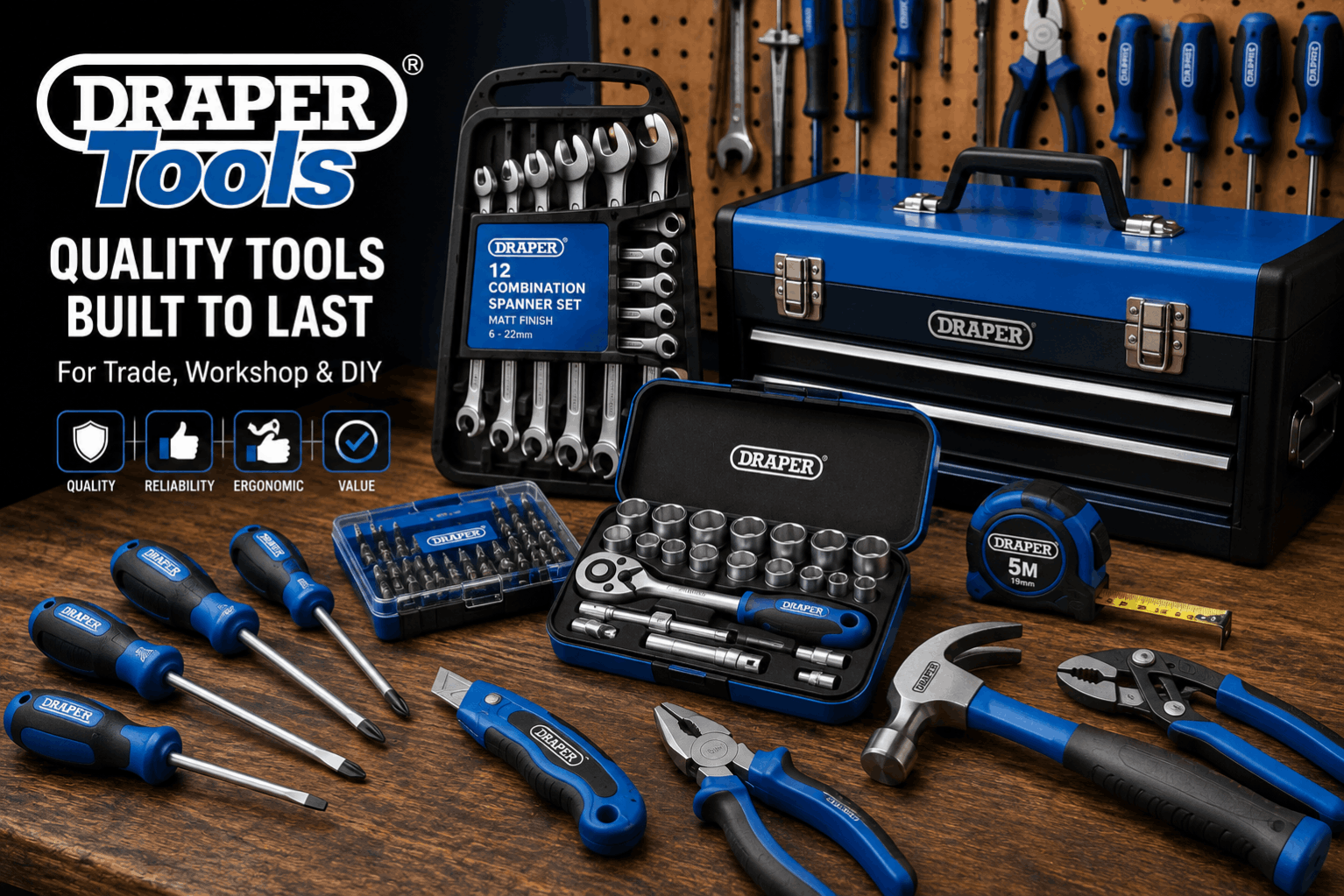
For tradespeople and home users researching Draper Tools, the range includes a broad selection of hand tools, workshop equipment, power tool accessories, automotive products and storage solutions. From socket sets and spanners to screwdrivers, pliers, hammers and specialist workshop tools, the brand is commonly associated with equipment designed for both professional and general practical use.
One of the most important principles when selecting tools is using the correct item for the job. Improvised methods may seem convenient, but they can damage components and increase the risk of injury. A correctly sized spanner or socket, for example, provides better contact with a fastener than an adjustable or makeshift alternative where precision is required.
Socket sets are among the most useful additions to a workshop or automotive toolkit. A typical set includes a ratchet, a range of socket sizes and often extension bars or universal joints. These accessories make it easier to work in confined areas while reducing the time needed to tighten or remove multiple fasteners.
Spanners are equally important. Combination spanners provide both open-ended and ring profiles, allowing users to choose the most appropriate option depending on access and the level of grip required. Ratcheting spanners can also be particularly useful in confined spaces where there is insufficient room to repeatedly reposition the tool.
Screwdrivers remain essential in almost every trade. Flat, Phillips, Pozidriv, Torx and other drive profiles all require correctly matched tools. Using the wrong screwdriver can damage the head of a screw, making future removal far more difficult. A good set should therefore include the profiles and sizes most commonly encountered in the user's work.
Pliers provide versatility across a wide range of tasks. Combination pliers are suitable for general gripping and cutting, while long-nose pliers offer improved access in tight spaces. Side cutters are designed for cutting wire, and water-pump pliers are useful when working with larger fittings or plumbing components.
Hammers are another basic but important category. Claw hammers are commonly used for general construction and woodworking, while club hammers, rubber mallets and specialist striking tools suit different materials and applications. Choosing the correct hammer helps reduce damage while improving control.
Cutting tools should always be selected carefully. Hacksaws, knives, snips and hand saws all perform different jobs, and blade type plays a major role in both safety and cutting quality. A sharp, appropriate blade generally requires less force and produces cleaner results than a worn or unsuitable one.
Measuring equipment is just as important as cutting and fastening tools. Tape measures, levels, squares and marking tools help ensure work is laid out accurately before materials are altered. Small errors made during measurement can quickly become expensive once cutting or installation begins.
Automotive users often require additional specialist equipment. Torque wrenches, breaker bars, axle stands, battery chargers, diagnostic accessories and workshop lighting can all form part of a more complete maintenance setup. Selecting equipment appropriate to the vehicle and task helps improve both safety and precision.
Tool storage should also be considered when building a collection. Loose tools are easier to damage or lose and can make working less efficient. Tool chests, cabinets, portable boxes and organised cases allow equipment to be stored by category and make missing items easier to identify.
For mobile tradespeople, portability is particularly important. A heavy workshop cabinet may be ideal in a permanent garage but unsuitable for moving between jobs. Durable tool bags, modular cases and compact boxes often provide a better solution for site work.
Ergonomics matter more than many people realise. A professional may use the same wrench, screwdriver or pair of pliers repeatedly throughout the day. Comfortable handles, balanced weight and secure grips can reduce fatigue and improve control, especially during long or repetitive tasks.
Maintenance is essential if tools are expected to last. Equipment should be cleaned after exposure to dirt, moisture or chemicals, while moving parts may benefit from light lubrication. Tools should also be stored in dry conditions to reduce the risk of corrosion.
Regular inspection is just as important as cleaning. Cracked handles, damaged jaws, worn cutting edges or loose components can make a tool unsafe. Continuing to use damaged equipment simply because it still functions can increase the risk of accidents and poor-quality work.
Electrical tasks require additional care. Tools intended for electrical work should be properly rated and inspected before use. A plastic or rubberised handle alone does not mean a tool is suitable for live electrical applications.
For occasional DIY work, buying a smaller number of versatile tools is often more practical than purchasing a large professional kit. A well-chosen socket set, screwdriver set, hammer, pliers, tape measure and adjustable wrench will cover many common household repairs.
Professional users usually benefit from more specialised equipment. Mechanics, electricians, plumbers, carpenters and engineers all have different requirements, so a useful toolkit should reflect the actual tasks performed rather than simply containing as many tools as possible.
Buying complete sets can offer convenience and good organisation, but purchasing individual tools can sometimes provide better value if only certain sizes or profiles are needed. Over time, many users build their collection around the work they perform most often.
Consumables and replacement parts should also be considered. Saw blades, cutting discs, knife blades and other wear items eventually need replacing. Choosing equipment with readily available compatible consumables makes long-term maintenance easier and more cost-effective.
Ultimately, Draper Tools provide a broad range of practical equipment for trade, workshop, automotive and DIY applications. By selecting tools that match the task, maintaining them correctly and prioritising safety, comfort and durability, users can build a reliable toolkit that supports accurate and efficient work for many years.