Latest Blog posts
Energy Procurement: Why a Smart Energy Strategy Can Save Your Business Money
Managing business costs has never been more important, and energy remains one of the largest overheads for organisations across almost every sector. From offices and retail premises to warehouses and manufacturing facilities, rising energy prices can have a significant impact on profitability. While many businesses simply renew their existing contracts each year, taking a strategic approach to energy purchasing can unlock substantial savings and provide greater financial certainty.
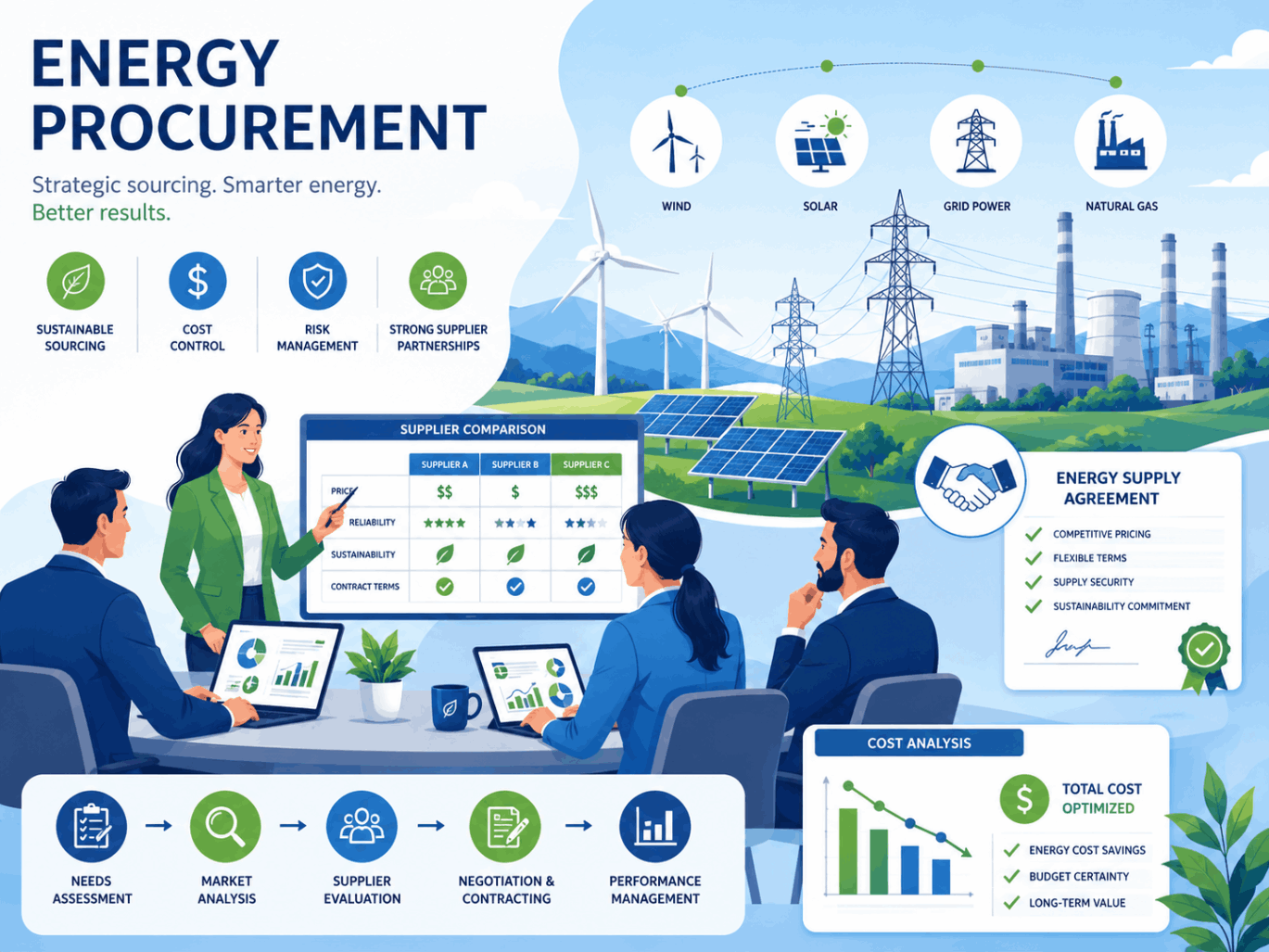
For businesses exploring Energy Procurement, the objective is to secure the most suitable electricity and gas contracts while balancing cost, flexibility, and long-term business goals. Effective energy procurement goes far beyond comparing prices. It involves understanding energy consumption, monitoring market conditions, evaluating suppliers, and developing a purchasing strategy that supports both operational efficiency and financial stability.
Every business uses energy differently, which is why there is no one-size-fits-all procurement solution. A small office may prioritise budget certainty with a fixed-rate contract, while a large manufacturer with high energy demand may benefit from a more flexible purchasing strategy that takes advantage of wholesale market movements. Understanding your organisation's usage patterns is the first step towards making informed procurement decisions.
Reviewing historical energy data provides valuable insight into how and when energy is consumed. Businesses often discover seasonal fluctuations, periods of peak demand, or equipment that consumes more energy than expected. This information allows decision-makers to identify opportunities for efficiency improvements while ensuring future contracts accurately reflect actual business requirements.
Energy markets are influenced by a wide range of global factors. Weather conditions, international energy supplies, government policies, geopolitical events, and wholesale fuel prices all contribute to daily fluctuations in electricity and gas costs. Monitoring these trends allows businesses to identify favourable purchasing opportunities instead of automatically accepting renewal offers that may not represent the best value.
Contract selection is one of the most important aspects of energy procurement. Fixed-price agreements offer predictable costs throughout the contract period, helping businesses prepare accurate budgets and avoid unexpected price increases. Flexible purchasing arrangements allow organisations to purchase energy at different points throughout the contract term, potentially securing lower prices when market conditions are favourable. The most appropriate option depends on the organisation's appetite for risk and its long-term financial objectives.
Supplier selection should also involve more than simply comparing unit rates. Service quality, billing accuracy, account management, customer support, and contract flexibility all contribute to the overall value of an energy supplier. Businesses should consider whether suppliers offer dedicated account managers, online management portals, accurate billing systems, and responsive customer service alongside competitive pricing.
Sustainability has become an increasingly important consideration during the procurement process. Many organisations are actively working towards reducing their carbon footprint, and energy purchasing plays an important role in achieving these objectives. Renewable electricity tariffs, green gas options, and carbon reporting services allow businesses to improve their environmental performance while demonstrating their commitment to responsible business practices.
Improving energy efficiency often goes hand in hand with procurement. Analysing energy usage frequently identifies opportunities to reduce consumption through relatively simple improvements. Upgrading to LED lighting, installing smart heating controls, improving insulation, maintaining HVAC systems, and replacing ageing equipment can all contribute to lower energy bills while reducing environmental impact. These savings continue long after a new contract has been signed.
Technology has transformed the way businesses manage energy. Smart meters and advanced energy monitoring systems now provide real-time information about consumption, allowing organisations to identify unusual usage patterns, monitor performance, and react quickly to inefficiencies. Detailed reporting enables management teams to make informed decisions and continuously improve their energy strategy throughout the year.
Businesses operating from multiple locations often benefit from consolidating their procurement activities. Managing contracts centrally provides greater purchasing power, simplifies administration, and creates opportunities to negotiate improved commercial terms with suppliers. A coordinated procurement strategy also provides greater visibility across all sites, making it easier to identify trends and implement company-wide efficiency initiatives.
Professional energy procurement consultants can provide valuable support throughout the purchasing process. Their market knowledge, supplier relationships, and contract negotiation experience often enable businesses to secure more competitive pricing than they could achieve independently. Consultants also monitor market conditions throughout the year, providing advice on renewal timing and helping organisations avoid purchasing energy during periods of unusually high wholesale prices.
Risk management remains an essential element of any procurement strategy. Energy markets can be unpredictable, and businesses without a structured purchasing plan may be exposed to unnecessary price increases. Developing a procurement strategy that includes regular contract reviews, market monitoring, and forward planning provides greater financial stability while reducing exposure to market volatility.
Ultimately, successful Energy Procurement is about creating a long-term strategy rather than simply purchasing the cheapest available tariff. Businesses that understand their energy usage, review contracts regularly, invest in efficiency improvements, and work with reputable suppliers are often able to achieve significant savings while improving operational performance. As energy costs continue to influence business profitability, adopting a proactive procurement strategy has become an essential part of responsible financial management.