Latest Blog posts
Terminal Rails: Improving Reliability in Complex Electrical Systems
Modern electrical systems depend on large numbers of individual connections working reliably together. In industrial equipment, transportation systems and infrastructure applications, these connections may need to operate for many years while being exposed to vibration, temperature changes and regular maintenance. The way electrical terminations are arranged can therefore have an important influence on reliability, accessibility and the overall quality of an installation.
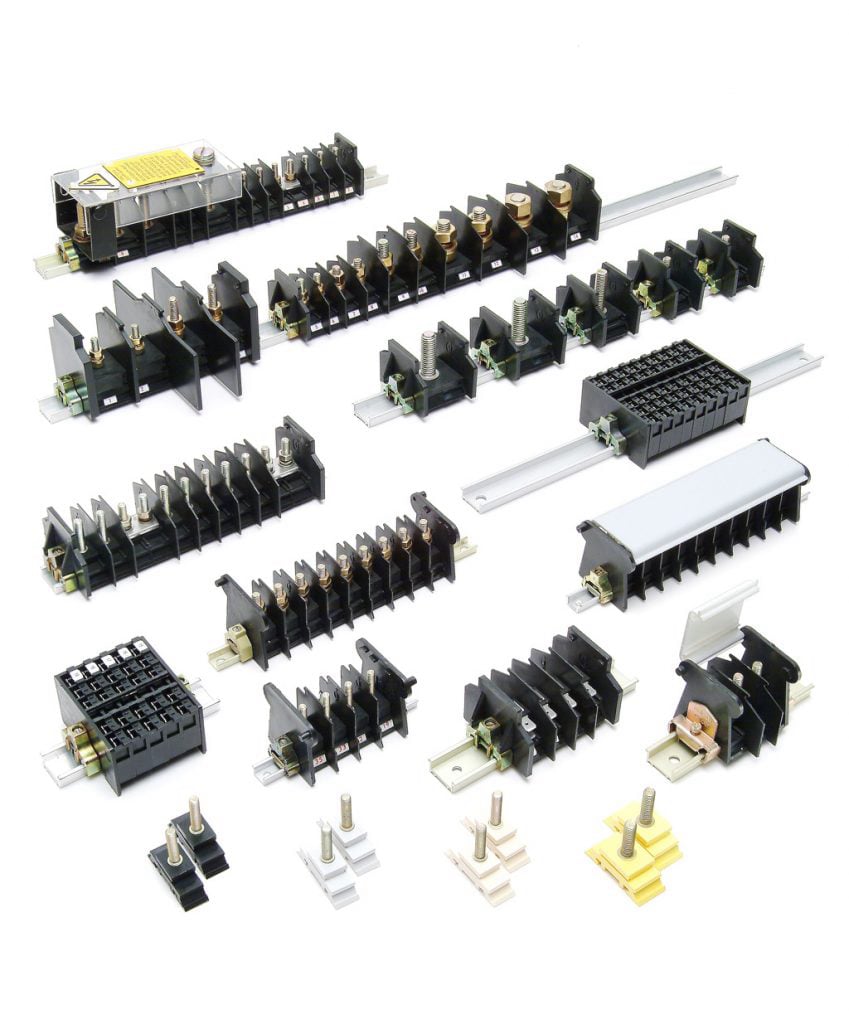
Terminal Rails help engineers create structured connection points where wiring can be terminated, identified and accessed systematically. Rather than allowing cables and terminals to become distributed throughout an enclosure, a rail-based arrangement provides a defined location for compatible terminal components. This can simplify installation while making future inspection, testing and modification considerably easier.
Why Electrical Connections Need Structure
Electrical systems become increasingly difficult to manage as their complexity grows. A relatively small control system might contain dozens of conductors, while larger installations can contain hundreds or thousands.
Without an organised termination strategy, identifying individual circuits can become time-consuming.
Grouping connection points together allows engineers to create logical sections within an installation. Power circuits, control wiring, communications and monitoring equipment can each be arranged according to the system design.
This creates an electrical installation that is easier to understand both during initial construction and throughout its service life.
Creating a Clear Interface Between Systems
One particularly useful role of terminal assemblies is providing an interface between different parts of an electrical system.
For example, cables entering an enclosure from external equipment may terminate at an organised connection point before internal wiring continues towards control equipment.
This creates a clear boundary between field wiring and the internal electrical system.
During maintenance, technicians can then test or isolate circuits at a known location rather than tracing conductors through the entire installation.
Supporting Modular Construction
Many modern electrical systems are manufactured using modular construction techniques.
Control cabinets, equipment panels and electrical assemblies may be produced separately before being integrated into a larger machine or vehicle.
A structured termination arrangement makes this process easier because individual modules can have clearly defined electrical connection points.
Modules can potentially be assembled and tested independently before final integration, helping manufacturers identify problems earlier in the production process.
Applications in Rail and Transportation
Transportation environments create demanding requirements for electrical components.
Rail vehicles contain extensive wiring supporting functions such as lighting, communications, passenger information, doors, control equipment and auxiliary electrical systems.
These systems need to remain maintainable throughout the operational life of the vehicle.
Vibration is an especially important consideration. Unlike a stationary control cabinet inside a building, equipment installed on a train or other vehicle may experience continuous movement and repeated mechanical loading.
Mounting arrangements therefore need to maintain their mechanical security while allowing electrical components to remain accessible when maintenance is required.
Industrial Machinery and Automation
Automated manufacturing equipment also relies heavily on organised electrical connections.
A production machine may contain motors, sensors, safety devices, switches, controllers and communication systems. Many of these devices require individual wiring connections back to a central control panel.
A logical terminal arrangement allows these connections to be grouped according to function.
If a sensor fails, for example, a maintenance technician can refer to the electrical drawings, identify the appropriate connection point and perform diagnostic tests without unnecessarily disturbing unrelated wiring.
Improving Fault Diagnosis
Electrical faults can be expensive when they cause equipment downtime.
The speed at which engineers can locate a problem therefore becomes important, particularly in manufacturing and transportation environments where equipment availability directly affects operations.
Clearly identified termination points can simplify diagnostic work.
Technicians may be able to check voltage, continuity or signal conditions at defined positions within the circuit.
If the electrical documentation corresponds accurately with physical terminal identification, troubleshooting becomes considerably more systematic.
The Importance of Labelling
Good electrical organisation depends heavily on identification.
Individual terminals can be numbered or marked so they correspond with circuit diagrams, wiring schedules and maintenance documentation.
Labels should remain legible throughout the expected operating life of the equipment.
Consistent identification also helps reduce errors during installation. An engineer connecting a replacement component can confirm the required connection positions rather than relying solely on wire colours or physical routing.
Designing for Maintenance Access
A densely packed electrical enclosure may appear efficient, but excessive component density can make maintenance difficult.
Engineers need sufficient space to inspect connections, use test equipment and replace components safely.
Terminal positioning should therefore consider accessibility as well as enclosure capacity.
Cable routes also need to be planned carefully so that conductors do not obstruct access to connection points.
Good design balances efficient use of space with practical maintenance requirements.
Environmental Considerations
Electrical equipment can operate under widely varying environmental conditions.
Industrial machinery may be exposed to dust, oils or elevated temperatures, while transportation equipment may experience vibration, humidity and repeated temperature changes.
Outdoor installations can introduce additional challenges such as condensation and corrosion.
Material selection and protective finishes therefore need to reflect the intended environment.
Enclosure design also contributes to protection by limiting exposure to contaminants and moisture.
Managing Mechanical Loads
Electrical conductors can place mechanical forces on their connection points, particularly when larger cables are involved.
Cable management should prevent unnecessary strain being transferred directly onto terminals.
Suitable cable routing, support and strain relief can help ensure conductors remain securely positioned.
This becomes particularly important where equipment is exposed to movement or vibration.
A reliable termination system therefore depends not only on the connection itself but also on how the surrounding wiring is supported.
Planning for Expansion
Electrical systems often change after installation.
Manufacturing equipment may gain additional sensors, transportation systems may receive technology upgrades and control panels may need extra monitoring equipment.
Designing an installation with some spare connection capacity can simplify these future modifications.
If every available position is occupied from the beginning, adding even a small circuit may require significant rearrangement.
Allowing appropriate expansion space can therefore make future upgrades easier and potentially reduce downtime.
Separation of Different Circuit Types
Complex electrical systems may contain circuits operating at different voltages or serving different purposes.
Power, control, communications and safety circuits may need to be arranged according to specific design requirements.
Physical separation can help create a clearer installation and may be required depending on the applicable standards and equipment involved.
Terminal grouping can support this approach by providing defined sections for different circuit categories.
Inspection During Manufacturing
Organised termination arrangements can also support quality assurance.
During manufacturing, technicians can visually inspect connection points and verify wiring against production documentation.
Testing can then confirm that circuits have been connected correctly before equipment leaves the factory.
This structured approach can reduce the likelihood of wiring errors remaining undiscovered until final commissioning.
Replacement and Refurbishment
Long-life equipment frequently undergoes refurbishment rather than complete replacement.
Rail vehicles, industrial machinery and infrastructure systems may remain operational for decades, during which electrical components can become obsolete or require upgrading.
Clearly organised termination points can make refurbishment easier because engineers can understand how existing systems are interconnected.
New equipment can then be integrated while retaining appropriate sections of the original wiring.
Documentation and Lifecycle Management
Good documentation should accurately reflect the physical electrical installation.
Circuit diagrams, terminal schedules and cable identification records provide technicians with a map of how the system has been constructed.
Whenever modifications are made, these records should also be updated.
Failure to maintain accurate documentation can make future maintenance unnecessarily difficult, regardless of how well the original system was designed.
Safety During Electrical Work
Structured electrical connections can also support safer maintenance practices.
Clearly identified circuits make it easier for technicians to understand which equipment they are working on and where isolation boundaries exist.
However, organised terminals do not replace appropriate electrical safety procedures.
Isolation, testing and safe working practices must always follow the requirements applicable to the installation and environment.
Designing for the Complete Lifecycle
The best electrical designs consider much more than initial assembly.
Engineers should think about how the equipment will be installed, tested, maintained, modified and eventually refurbished.
A connection system that saves a small amount of space during manufacturing may create much greater difficulties if technicians cannot access it several years later.
Lifecycle thinking therefore encourages designers to balance compact construction with accessibility and future flexibility.
Ultimately, Terminal Rails contribute to electrical reliability by providing a structured foundation for organising, identifying and maintaining large numbers of connections. Their value becomes particularly clear in complex industrial and transportation systems where equipment must remain serviceable over long operational lifecycles. Combined with effective labelling, cable management and accurate documentation, they help create electrical installations that are easier to manufacture, diagnose, maintain and upgrade.