Latest Blog posts
Very Large Planters for Statement Garden and Outdoor Displays
Large-scale planting can completely change the appearance and feel of an outdoor space. Whether used in a private garden, patio, courtyard, roof terrace or commercial entrance, oversized containers can create height, structure and visual interest. They are especially useful where permanent planting beds are not available or where a more flexible layout is needed.
Very large planters are ideal for creating statement displays with shrubs, small trees, ornamental grasses, bamboo, climbers and seasonal plants. Their generous size provides more room for root growth, better stability and stronger visual impact. Used well, they can help define seating areas, frame doorways, soften hard landscaping and add greenery to spaces that might otherwise feel plain or empty.
One of the main benefits of using larger planters is design flexibility. Unlike fixed borders, planters can be positioned to suit the space and the overall layout. They can be used in pairs for a formal entrance, grouped together for a layered garden display or placed along boundaries to create screening. This makes them suitable for both modern and traditional outdoor designs.
Size should be chosen carefully. A planter needs to be large enough for the plants it will hold, but it should also suit the surrounding area. A pot that is too small may look lost beside a large building or open patio, while a planter that is too big may overpower a compact balcony. The best choice balances scale, plant type and available space.
Material is another important factor. Lightweight resin or fibreglass planters can be easier to move and are often practical for patios, balconies and commercial settings. Stone, concrete and ceramic planters can look substantial and elegant but may be extremely heavy once filled. Metal planters can create a contemporary look, while timber planters may suit natural or rustic garden schemes.
Drainage is essential for healthy plants. Very large containers can hold a lot of water, so excess moisture must be able to escape. Drainage holes, suitable compost and careful positioning can all help prevent waterlogging. In some cases, raising the planter slightly off the ground can allow water to drain more freely and protect surfaces underneath.
Compost choice is also important. Larger plants need a growing medium that provides structure, nutrients and moisture retention. Soil-based compost can be useful for long-term planting because it offers stability and support. For trees and shrubs, good-quality compost can make a noticeable difference to long-term health and growth.
Watering should not be overlooked. Although large planters retain moisture better than small pots, they can still dry out during warm weather or windy conditions. Plants in containers rely on the water they receive, so regular checking is important. Mulching the surface can help reduce evaporation and keep the display looking tidy.
Very large planters can be particularly useful for privacy. Tall grasses, bamboo, pleached trees, bay trees and evergreen shrubs can be grown in containers to screen seating areas or overlooked spaces. This can provide a softer alternative to fencing and allows privacy planting to be introduced without changing the garden permanently.
For commercial spaces, oversized planters can make entrances and outdoor areas more welcoming. They can be used outside offices, restaurants, hotels, shops and public buildings to guide movement, separate seating areas or add seasonal colour. Well-maintained planters can improve kerb appeal and create a more cared-for appearance.
Plant selection should be based on the conditions. Sunny locations may suit Mediterranean-style planting, grasses, lavender or olive trees, while shaded areas may require ferns, hostas or shade-tolerant shrubs. Exposed sites may need tougher plants that can handle wind. Matching plants to the environment helps reduce maintenance and improve results.
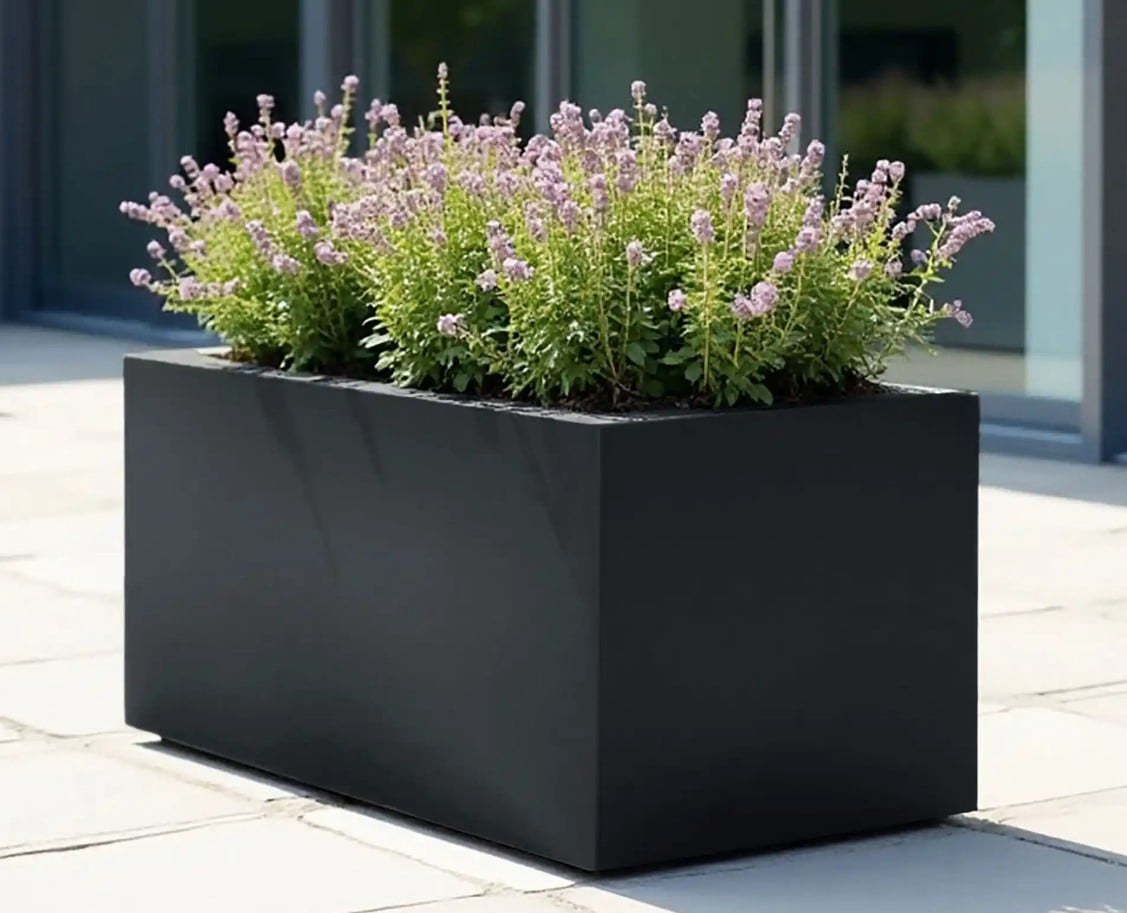
The shape of the planter also affects the design. Tall square planters can add height and formality, while long rectangular planters are useful for screening and dividing spaces. Round pots can soften corners and create a more traditional look. Mixing heights and shapes can create a natural layered effect.
Before filling a very large planter, weight should be considered. Once compost, plants and water are added, the container can become difficult to move. It is usually best to position the planter first, especially on patios, decking, balconies or roof terraces. For raised areas, load-bearing capacity should be checked.
Maintenance will depend on the plants chosen. Some displays may only need watering, feeding and occasional pruning, while others may require seasonal replanting. Checking drainage holes, removing dead leaves and refreshing the top layer of compost can help keep planters looking smart throughout the year.
In summary, very large planters offer a practical and attractive way to introduce structure, greenery and impact to outdoor spaces. They are suitable for statement planting, privacy screening, entrances, patios and commercial areas. With the right size, material, drainage and plant choice, large containers can create long-lasting displays that are both functional and visually impressive.